Wednesday, July 4, 2012

The TTAP Method at St. Thomas Aquinas and Cornell University


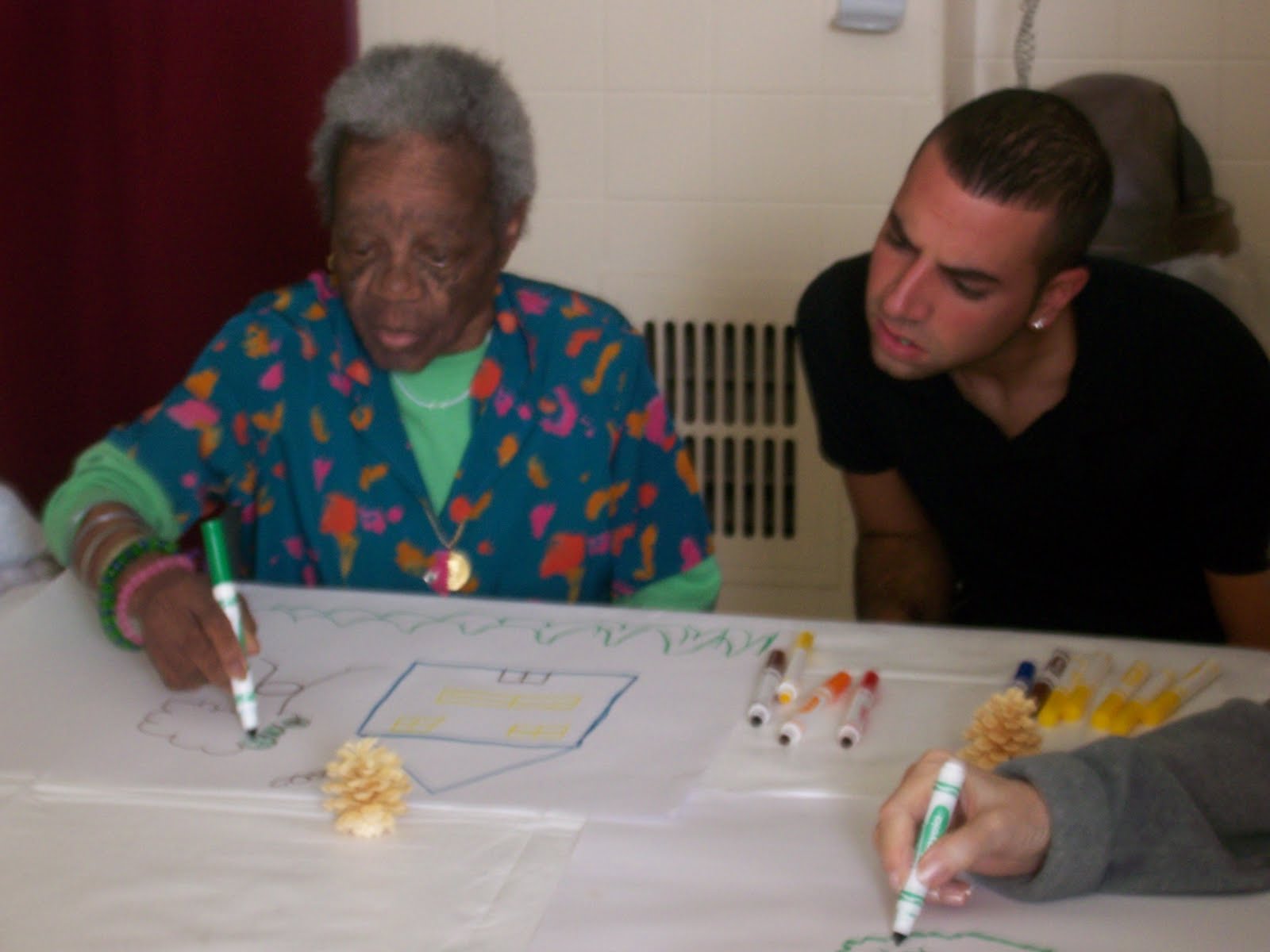
I thought I would share some interesting photos from the Cornell University and Weil Medical College study, which was conducted in January through May 2009. View these "capturing" images from both my students who are learning the TTAP Method and the participants at Cornell "doing" the TTAP Method. Here are some of those images, notice the concentration and the "flow" as the participants explore the creative arts in painting and mask making...

Tuesday, July 3, 2012

Friday, June 29, 2012

The students TTAP Method study at Cornell


I thought I would share some interesting photos from the Cornell University and Weil Medical College study, which was conducted in January through May 2009. View these "capturing" images from both my students who are learning the TTAP Method and the participants at Cornell "doing" the TTAP Method. Here are some of those images, notice the concentration and the "flow" as the participants explore the creative arts in painting and mask making.

This research study was presented at the Gerontological Society Annual Conference in November, 2010. For more infomation go to geron.org.

Thursday, June 28, 2012

Listen to a Podcast by Dr. Levine Madori on the TTAP Method Approach

Click Here to listen to a Podcast interview with Dr. Levine-Madori over the TTAP Method©

"Art Therapist Melissa Solorzano speaks with Dr. Linda Levine Madori. With a quarter-century of experience in the field of gerontology, Dr. Levine Madori has explored the relationship of arts and aging. The Certified Recreation Therapist and Board Certified Art Therapist is the author of a new, breakthrough book, Therapeutic Thematic Arts Programming for Older Adults.She has helped, those suffering from dementia and Alzheimer’s, having designed innovative creative arts programs and worked with the elderly, skilled nurses, caregivers, and residents of assisted living and senior housing."

(Description taken directly from the Creative Therapy Sessions website developed by Melissa Solorzano)


Visit the website, under publications to read about the 7 efficacy research studies conducted over the last two years.

A special thanks for Melissa Solorzano for spearheading podcasts for Art Therapists!

Wednesday, June 27, 2012

How Alzheimer's is directly affected through the TTAP Method

The TTAP Method is a Multimodal approach - which is defined as a program that addresses behavior, affect, sensation, imagery intrapersonal and interpersonal relationships. This construct was first developed by psychologist, Arnold Lazarus in the 1950's and has been proven to be the most effective approach for the individual diagnosed with Alzheimer's disease.
The following is an image of the specific refions of the brain stimulated through the TTAP Method
Step 2 - Music and Meditation
If you continue to add the other Steps to your programming, such as
Step 3- Drawing and Painting the brain is stimulated further.


KEEP POSTED FOR HOW THE BRAIN IS STIMULATED IN
ALL 9 STEPS OF THE TTAP METHOD!


Tuesday, June 26, 2012

DID YOU KNOW THAT?


THIS PHOTO WAS TAKEN AT BEECHTREE HEALTHCARE AND REHABILITATION FACILITY, AS YOU WILL NOTE THE STAFF IS ASSISTING THE INDIVIDUALS AS THEY COMPLETE THEIR PROJECTS.

The Theme Centered Approach supports the participants’ independence through personal choices, directly enhancing person centered programming (Dombeck, 1983).

Group members naturally support each other as the group cohesiveness is continually reinforced through the sharing, and caring for each other (Levine Madori, 2009).

The actual “thinking” about where to place objects within an art activity, is now know to stimulate cognition as well as enhance self perceived identity in the art group (Moon, 2002).

Friday, June 22, 2012

Step 4 of the TTAP Method at Bergen Regional Medical Center


Step 4 of the TTAP Method is Drawing/Sculpture, these patients are drawing what they saw in their Meditation (Step 3 of the TTAP Method) as they go back to their long term memory and share their stories.

Thursday, June 21, 2012

Exploration of sensory stimulation through the TTAP Method

The TTAP Method structures the group process towards a dynamic balance between the needs of the individual, the interaction in the group and the therapeutic goal intergrating the Theme Centered Interaction, (i.e. I, We, It: Balance). Students at HAMK International Summer School started their own exploration of themes as a way to connect the group enhancing therapeutic interactions. Below students are first given the directive to explore the outdoors with the focus of utilizing touch, taste , smell, sight and sound.


In this movie clip, you are witnessing students (with closed eyes), experiencing various collected found natural items, including flowers, branches, leaves, bark, stones, roots, etc. Through this experiential, students are able to explore heightened sense of awareness in the mind-body connection.

Wednesday, June 20, 2012

TTAP Method (c) featured in the American Journal of Therapeutic Recreation- Summer 2009


Uses of therapeutic thematic arts programming,
TTAP Method©, for enhanced cognitive and
psychosocial functioning in the geriatric population
Linda Levine-Madori, PhD, CTRS, ATR-BC, LCAT

Currently, there is a need for strength-based recreation therapy approaches which promote the retention of skills and abilities of the growing older adult population. This article introduces an emerging multimodal intervention: Therapeutic Thematic Arts Programming for Older Adults (TTAP Method©), an approach that provides stimulation to three distinct brain systems, encouraging brain wellness and neural regeneration, thereby providing a viable means for enhancing cognitive functioning in older adults. Research on TTAP Method© efficacy is currently being explored at Cornell University and previous pilot studies strongly indicate that the TTAP Method© may be an effective intervention for slowing the progression of mild cognitive impairment to Alzheimer’s disease. TTAP Method© is person centered and culturally competent, and engages a variety of creative activities.


Please go to http://www.pnpco.com/pn10000.html to learn more about the American Journal of Therapeutic Recreation, published by Weston Medical Publishing.


Tuesday, June 19, 2012

How Alzheimer's is directly affected through steps 2 & 3 of the TTAP Method

The TTAP Method is a Multimodal approach - which is defined as a program that addresses behavior, affect, sensation, imagery intrapersonal and interpersonal relationships. This construct was first developed by psychologist, Arnold Lazarus in the 1950's and has been proven to be the most effective approach for the individual diagnosed with Alzheimer's disease.
The following is an image of the specific refions of the brain stimulated through the TTAP Method
Step 2 - Music and Meditation
If you continue to add the other Steps to your programming, such as
Step 3- Drawing and Painting the brain is stimulated further.


Monday, June 18, 2012

The brain stimulated through the TTAP Method steps 2 and 3

The TTAP Method is a Multimodal approach - which is defined as a program that addresses behavior, affect, sensation, imagery intrapersonal and interpersonal relationships. This construct was first developed by psychologist, Arnold Lazarus in the 1950's and has been proven to be the most effective approach for the individual diagnosed with Alzheimer's disease.
The following is an image of the specific refions of the brain stimulated through the TTAP Method
Step 2 - Music and Meditation
If you continue to add the other Steps to your programming, such as
Step 3- Drawing and Painting the brain is stimulated further.


Friday, June 15, 2012

Thursday, June 14, 2012

Bet you didn't know...

In the United States alone, 5.3 Million people have Alzheimer's Disease.
Globally about 30.0 Million people have Alzheimer's Disease.
In 2020 the it is estimated that 1 out of every 83 people will have Alzheimer's Disease.

Wednesday, June 13, 2012

DENDRITES and your Brain--USE them or LOOSE them!


My second book is almost on the market! It is entitled: The New Psychology of Alzheimer's Disease; the TTAP Method (c) and in my research I found some interesting photographs taken inside the human living brain. Scientists were only able to "see" into a "living" brain in 2000 when CAT and PET scans were invented first at Harvard Medical University. Dentrites carry electric impulses through the brain cells. This then fosters cell growth, enhanced communication, between cells that eventually turn into thoughts, memories and all the other cognitive processes that happen deep within our brain. The image above is of an "ENRICHED DENDRITE" , the reasons that keep our Denrites rich, thick and plump is by stimulating our brains through our envionment, our thoughts and our behaviors. Scientists relize that if we read, write, paint, sculpt, play music and dance our dentrites grow and continue to grow until the day we die (Faul, 2008). On the other hand, lack of mental stimulation, excess alcohol, drugs, lack of education, and a boring job will in fact directly effect your Denrites as seen below.


So, today think about how you use your thought process, which effects your brain and start creating your own brain wellness!

Tuesday, June 12, 2012

Monday, June 11, 2012

TTAP Method enhances reminiscing and supports wellbeing

The movie, shown below, was taken after a TTAP Method(c)Therapeutic Session.
Step #1-Conversation, Step 2-Meditation and going within, Step 4- Sculpture and Step 3- painting. The ability to have individuals go within and reminisce about the past and share those details through personal exchanges has now been proven to enhance overall well being and cognitive abilities.

Friday, June 8, 2012

Did you know?

In the United States alone, 5.3 Million people have Alzheimer's Disease.
Globally about 30.0 Million people have Alzheimer's Disease.
In 2020 the it is estimated that 1 out of every 83 people will have Alzheimer's Disease.

Thursday, June 7, 2012

Video- TTAP Method© Learning Aid

Feel free to send feedback on the video! I experimented with the format and aimed to provide as much concrete information as possible.